Electric field
1.
Charakterizujte elektrický náboj, Coulombov zákon a elektrické pole.
Riešenie:
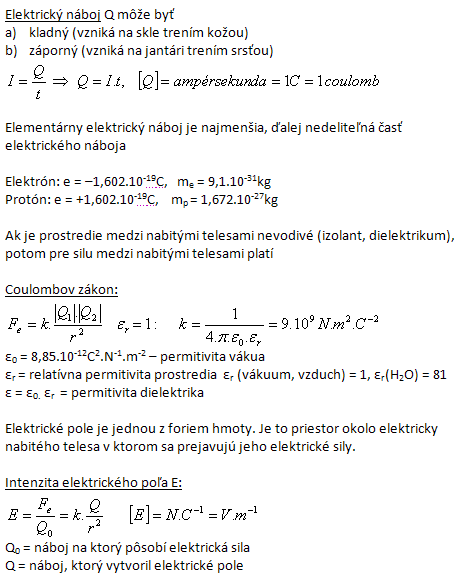
Elektrický náboj Q je skalárna fyzikálna veličina, ktorá charakterizuje vlastnosť telies (častíc) vstupovať do elektromagnetickej interakcie.
2.
Na sklenenej tyči, ktorú sme treli kožou vznikol náboj 80 nC. Koľko elektrónov prešlo z tyče na kožu? Ako sa zmenšila hmotnosť sklenenej tyče pri tomto deji?
Riešenie:
Rozbor:
Q = 80 nC = 80.10-9C, e = 1,602.10-19C, me = 9,1.10-31kg, n = ? Δm = ?
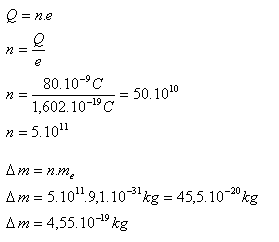
Na kožu prešlo 5.1011elektrónov. Úbytok hmotnosti 4,55.10-19kg nie je merateľný.
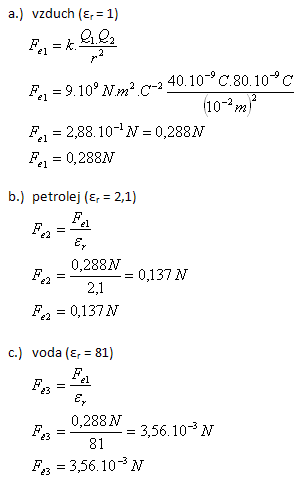
3. Dve malé guľôčky, jedna má náboj Q1 = 40 nC, druhá Q2 = 80 nC, sú umiestnené vedľa seba vo vzdialenosti 1cm. Akými veľkými silami na seba guľôčky pôsobia ak sú:
a.) vo vzduchu (εr = 1)
b.) v petroleji (εr = 2,1)
c.) vo vode (εr = 81) k = 9.109N.m2.C-2
Riešenie:
Rozbor:
Q1 = 40.10-9C, Q2 = 80.10-9C, r = 10-2m, k = 9.109N.m2.C-2
4.
Dva rovnaké náboje Q1 = Q2 = 5.10-8C sa odpudzujú vo vzduchu (k = 9.109N.m2C-2) silou 2,5.10-4N. Aká je medzi nimi vzdialenosť ?
Riešenie:
Rozbor:
Q1 = Q2 = 5.10-8C , 2,5.10-4N, k = 9.109N.m2C-2
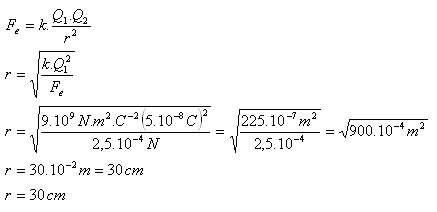
Vzdialenosť medzi nábojmi je r = 30 cm.
5.
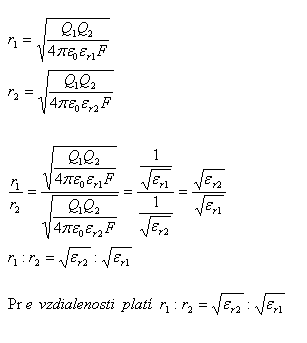
Medzi dvoma kladnými bodovými nábojmi Q1 a Q2 vo vzdialenosti r1 pôsobí v prostredí s εr1 sila Fe1. Obidva náboje premiestnime do prostredia s εr2. Ich vzdialenosť r2 upravíme tak, aby sa veľkosť sily nezmenila. Určite pomer r1 : r2 !
Riešenie:
Rozbor:
F1 = F2 = F
6.
Dva kladné bodové náboje Q1 a Q2 = 4.Q1 sú pevne umiestnené v dvoch bodoch vzdialených od seba 6 cm. Určite, kde treba na priamke spájajúcej obidva body umiestniť tretí náboj Q0, aby naň nepôsobila žiadna elektrická sila.
Riešenie:
Rozbor:
Q1, Q2 = 4.Q1, Q1Q2 = r = 0,06m, Q1Q0 = x, Q0Q2 = r – x
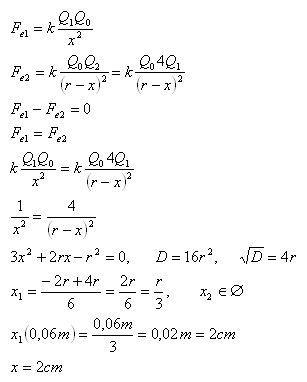
Náboj Q0 treba umiestniť do vzdialenosti 2cm od menšieho náboja.
7.
Aká veľká elektrická sila pôsobí na protón ( Qp= Q0 = 1,602.10-19C. mp = 1,672.10-27kg), ktorý sa nachádza v elektrickom poli s intenzitou elektrického poľa 2.105N.C-1? Aké bude zrýchlenie protónu v danom mieste elektrického poľa?
Riešenie:
Rozbor:
Qp= Q0 = 1,602.10-19C. mp = 1,672.10-27kg, E = 2.105N.C-1,
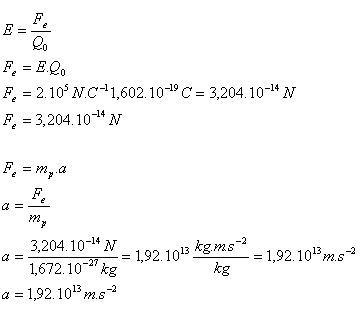
Na protón pôsobí elektrická sila Fe = 3,204.10-14N. Zrýchlenie elektrónu je a = 1,92.1013m.s-2
8.
V určitom bode elektrického poľa kladného bodového náboja (vo vákuu) pôsobí na náboj Q0 = 50 nC sila Fe = 10-4N. Určite
- a.) intenzitu elektrického poľa v tomto bode
- b.) veľkosť vytvárajúceho náboja Q vzdialeného od Q0 r = 0,3m
Riešenie:
Rozbor:
Q0 = 50 nC = 50.10-9C, Fe = 10-4N, r = 0,3m, k = 9.109N.m2.C-2 E = ?, Q = ?
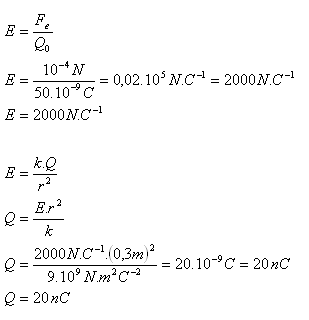
- Intenzita elektrického poľa v danom bode je E = 2000 N.C-1
- Vytvárajúci náboj má veľkosť Q = 20 nC.
9. Malá častica, ktorá má hmotnosť 1 mg a náboj 0,5 nC, je na začiatku v pokoji. S akým zrýchlením sa bude pohybovať v homogénnom elektrickom poli s intenzitou 30 kV.m-1. Akú dráhu častica urazí za 0,1s vo vákuu? Tiažovú silu pôsobiacu na časticu neuvažovať.
Riešenie:
Rozbor:
m = 10-6kg, Q0 = 0,5.10-9C, E = 30.103V.m-1, t = 10-1s, g = 10m.s-2, a = ?, s = ?
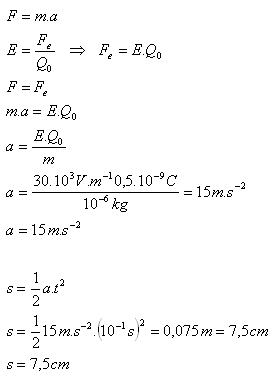
Zrýchlenie častice bude a = 15m.s-2. Urazí dráhu s = 7,5cm.
10.
Malá prachová častica má hmotnosť 0,01mg, náboj 10 nC a je umiestnená v homogénnom elektrickom poli. Siločiary majú vodorovný smer. Častica sa začne pohybovať s nulovou počiatočnou rýchlosťou a za 4s získa rýchlosť 50m.s-1. Určite intenzitu elektrického poľa!
Riešenie:
Rozbor:
m = 10-8kg, Q0 = 10-8C, t = 4s, v = 50m.s-1, a = 12,5m.s-2
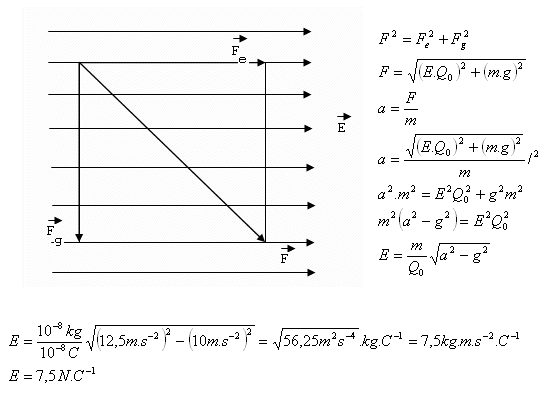
Intenzita elektrického poľa je E = 7,5 N.C-1